
This post is the culmination of something I’ve been thinking about for a while but have never put into writing after years of playing, reading about and reviewing games. There are obviously a lot of problems with gaming journalism as I’ve detailed in short and at length but one of these problems applies to other mediums as much as video games. This problem is the difference with how a product is received at the time and its lasting legacy. I’ve brushed this problem before with regard to film in these two posts but I don’t recall applying it to video games though it certainly applies.
It can be amusing to look at reviews for many games going back decades and wonder how the reviewers came to the conclusions they did. There are games that have remained popular for decades that got middling scores and games that have been all but forgotten that received high praise. A good example is Diablo II which was recently remastered and has been widely loved and played since the original release over twenty years ago. Yet, if you look at the reviews from the time, you’d wonder how that could have possibly come to be. There are games released every year to high praise that are forgotten soon after and the inaugural winner of the “Game Awards”, Dragon Age: Inquisition is good evidence of that. Then there are games that for whatever reason are ignored at the time but gradually become better appreciated as time goes on despite their initial lukewarm reception.
This doesn’t mean gaming journalists are useless as games still need critical appraisal and can benefit from promotion at the time of release. A high quality game with a low advertising budget could be rescued by positive reviews. A lot really depends on the reviewer too. For all my criticism of his literary output, Yahtzee Croshaw has a good sense of what makes a good game and I’d say most of his Zero Punctuation videos hold up well though I don’t always agree with him. There are plenty of other individual journalists who have a similarly sharp critical eye. A lot of problems come with lazy reviews by critics uninterested in the genre or those who have to smash through a game on a deadline. This can lead anyone (and I’ve certainly been guilty of this), to produce hasty conclusions — negative or positive that later don’t hold up. I’ve had to re-evaluate my opinion on a number of games over the years that I later came to appreciate or realised weren’t so good as my initial enthusiasm supposed.
So one really important consideration is time but this is in short supply when deadlines, embargos, advertising budgets, sales etc. are factored in. Time is not all though but it is necessary to consider what makes a game truly great. The heuristic I have come up with can be remembered with the acronym GREAT.
 Stalin’s War: A New History of World War II by Sean McMeekin

 Whether or not you consider sodomy a sin, there is still a widespread and healthy disgust that exists — particularly towards male sodomites. Now of course, this is seldom spoken aloud anymore but it is still there. How do I know this, you ask? Well, one can infer simply by what the media is willing to show of it. Even today with children being groomed in public libraries and schools by degenerate freaks and public buildings and “churches” covered in pride flags; the media is still very reluctant to show the realities of any one colour of this rainbow of perversions. When a “gay” character is shown on television or in a movie, it is usually a very effeminate male and any sort of intimacy is avoided. When ever physical intimacy is shown, it is usually two attractive women which though still sinful and wrong, provokes much less disgust among people in general. And even this is an inversion as your average lesbian is generally more masculine than a gay man.
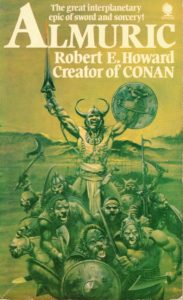 The cover of my copy which was published by Sphere Books

